In a nutshell
- 💡 Beauty tech spans LED masks, microcurrent, IPL, lasers, and AI skin analysis; beware subscription lock-ins and assume face-scanning means data collection.
- 🔬 Assess safety and efficacy: demand published specs (wavelengths, J/cm², mW/cm²), check contraindications, patch test, and avoid over-treating.
- 🛡️ Know your UK consumer rights: ASA/CAP claim rules, MHRA where applicable, UKCA/CE marks, 14-day cooling off, 30-day rejection, and payment protections like Section 75.
- 🔏 Protect privacy in AI beauty: treat selfies as special category data under UK GDPR, seek transparent controllers, opt-outs, deletion, and use a Data Subject Access Request; watch for bias across Fitzpatrick I–VI.
- ♻️ Budget for total cost of ownership: cartridges, gels, app paywalls; prefer repairable devices, spare parts, and WEEE take-back to cut e-waste.
Beauty and personal care are colliding with algorithms, LEDs, and at‑home devices that promise clinic‑level results from your bathroom mirror. For UK shoppers, the thrill of a smart mask or AI skin analysis sits alongside very real questions: Is it safe? Does it work? What happens to my face data? In a market sprinting ahead of regulation, due diligence is your best serum. Below, we unpack how to read claims, spot genuine innovation, protect your rights under UK law, and sidestep e‑waste traps—anchored in real user experiences and clear, practical checks you can apply before tapping “Buy now.”
What Counts as Beauty Tech in 2026
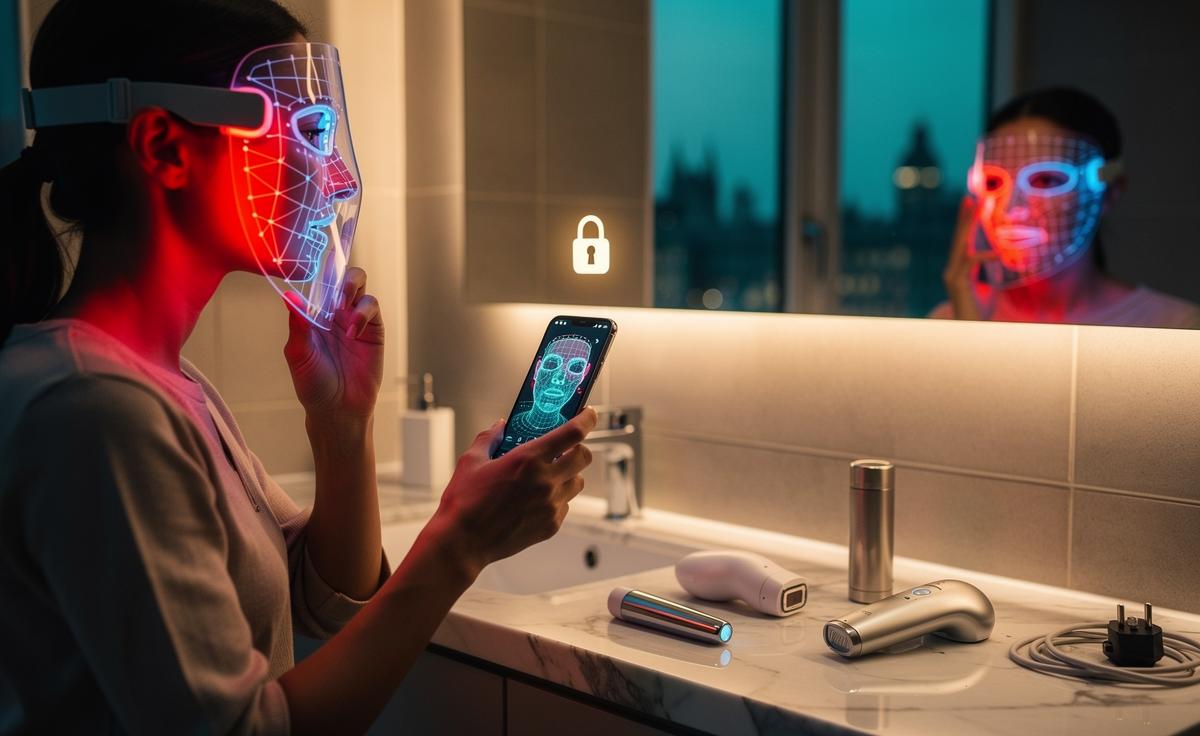
Beauty tech spans more than glossy LED masks. It includes microcurrent toning devices, at‑home IPL hair removal, laser gadgets, ultrasonic and radiofrequency wands, AI skin scanners in apps and mirrors, and AR try‑on for make‑up. Increasingly, devices pair with subscriptions—serums, pads, or filters that lock you into a brand’s ecosystem. That convenience can be helpful, yet costs and data trade‑offs mount quickly. Assume anything that scans, photographs, or learns from your face is collecting data you should actively manage.
Maya, a Manchester teacher, bought a mid‑priced red/blue LED mask to curb hormonal acne. She chose a model with published wavelength specs (around 415 nm blue and 630–660 nm red) and a simple timer. Within six weeks of regular use, inflammation eased; the true “win” was consistency, not magic. Her friend’s microcurrent device performed well but caused tingling and breakouts after she layered strong retinoids—a reminder that devices do not replace skin tolerance rules. Pairing active ingredients and energy‑based tech needs care, patch testing, and realistic timelines.
Safety and Efficacy: How to Read the Science
Start with claims. “Clinically proven” should point to a peer‑reviewed study with adequate sample size, a control group, and measured outcomes (for LEDs, look for fluence in J/cm² and irradiance in mW/cm²). If a device trumpets results but won’t share protocols or power specs, treat the claim as marketing, not medicine. For IPL, check hair and skin suitability: lighter hair and deeper skin tones often see limited efficacy or higher risk of burns or post‑inflammatory hyperpigmentation. Never use IPL on tattoos or moles.
Watch contraindications. Microcurrent is generally gentle but typically contraindicated with pacemakers, epilepsy, pregnancy, or metal implants near the treatment area. Photosensitising meds (e.g., isotretinoin) or strong exfoliants can clash with LED, IPL, and laser. Patch test on a low‑visibility spot; build frequency gradually. More intensity or longer sessions are not necessarily better—over‑treating often inflames skin and undermines results.
Power talk: consumer LEDs are safer because they deliver lower energy than clinics, which also means slower results. Expect 6–10 weeks for texture and tone changes; acne improvements can appear sooner with blue light. Track with consistent photos in the same lighting. Finally, hygiene matters: clean goggles, heads, and straps to prevent folliculitis, and avoid sharing devices that touch skin directly.
UK Rules and Your Rights: From Claims to Refunds
In the UK, advertising sits under the ASA’s CAP Code, which requires claims to be substantiated. If an influencer or brand suggests medical outcomes without evidence or implies professional equivalence, you can complain to the ASA. Devices with a medical purpose may fall under MHRA oversight; look for appropriate classification and technical documentation. For general electronics, UKCA or CE marks indicate conformity assessment—many categories still recognise CE, but check the product’s UK guidance.
Your core consumer protections include the Consumer Rights Act 2015 (goods must be as described, of satisfactory quality, and fit for purpose) and the Consumer Contracts Regulations 2013 (a 14‑day cooling‑off period for most online purchases). You can reject faulty goods within 30 days and seek repair, replacement, or refund; keep evidence of defects and communications. For subscriptions, new duties under the Digital Markets, Competition and Consumers Act 2024 strengthen pre‑contract information and cancellation flows—watch for clear renewal reminders and an easy “one‑click” exit.
Payments matter: purchases over £100 on credit card may be protected by Section 75 of the Consumer Credit Act; debit cards can offer chargeback. Keep serial numbers, treatment logs, and screenshots of claims—useful if a dispute arises with the retailer or platform marketplace.
Data and AI in Beauty: Privacy, Bias, and Transparency
Face scans, pore maps, and tone analysis often involve special category data under UK GDPR. Before you upload a selfie, check who the data controller is, where data is stored, how long it is kept, and whether it’s shared with advertisers or third parties. The ICO expects explicit consent for biometric processing and age‑appropriate design for under‑18s. If an app creates a “skin age” or risk profile, you’re entitled to meaningful information about the logic of any automated decision that significantly affects you.
Bias in AI skin analysis remains a problem when training data skews light. Tools can misclassify erythema, acne severity, or hyperpigmentation on darker skin tones. Ask brands for validation across Fitzpatrick I–VI; look for independent audits. Minimise exposure by using guest modes or on‑device processing where offered.
- Quick privacy checks: granular opt‑outs, local storage options, and a visible “delete my data” function.
- Red flags: vague “partners,” indefinite retention, and requiring selfies to unlock basic features.
- Power move: file a Data Subject Access Request to see what’s held and request deletion.
Cost, Sustainability, and Longevity: Why Cheaper Isn’t Always Cheaper
Hidden costs lurk in cartridges, pads, gels, or app paywalls. Total cost of ownership over two years can dwarf the sticker price, especially if heads or batteries aren’t replaceable. Ask how many treatment cycles you get per cartridge and whether third‑party consumables are supported without voiding warranty. Repairability matters: UK e‑waste is among Europe’s highest, making WEEE take‑back schemes, spare parts, and battery replacements more than nice‑to‑haves.
| Device Type | Typical Results Timeline | Red Flags | Best For |
|---|---|---|---|
| LED mask | 6–10 weeks consistency | No wavelengths, no power specs | Acne, redness, texture support |
| Microcurrent | Immediate lift; cumulative in 4–6 weeks | Contraindications ignored | Tone/contour maintenance |
| IPL hair removal | 8–12 weeks per area | Unsuitable for your tone/hair, no skin sensor | Light–medium skin, dark hair |
- Pros: at‑home convenience, habit building, lower per‑session cost over time.
- Cons: slower outcomes than clinics, data trade‑offs, consumable lock‑ins, e‑waste.
Favour brands with clear spare‑parts pricing, postal WEEE returns, and published reliability rates. Local repair partnerships are a bonus. If sustainability is central, consider low‑energy tools (e.g., non‑IoT LEDs) and devices that work with your existing skincare, not proprietary refills.
Beauty tech can be brilliant when you pair the right tool with steady routines, skin literacy, and UK‑specific consumer protections. Read the spec sheet like a label, screenshot claims, and control your face data with the same zeal you apply SPF. If something feels rushed or opaque, step back—time is on your side, and so are your rights. As innovation accelerates, what single question will you ask first—about safety, science, cost, or privacy—before you invite a new device into your bathroom?
Did you like it?4.4/5 (29)